
What Is Myopia Management and How Can It Help Protect Your Child’s Vision?
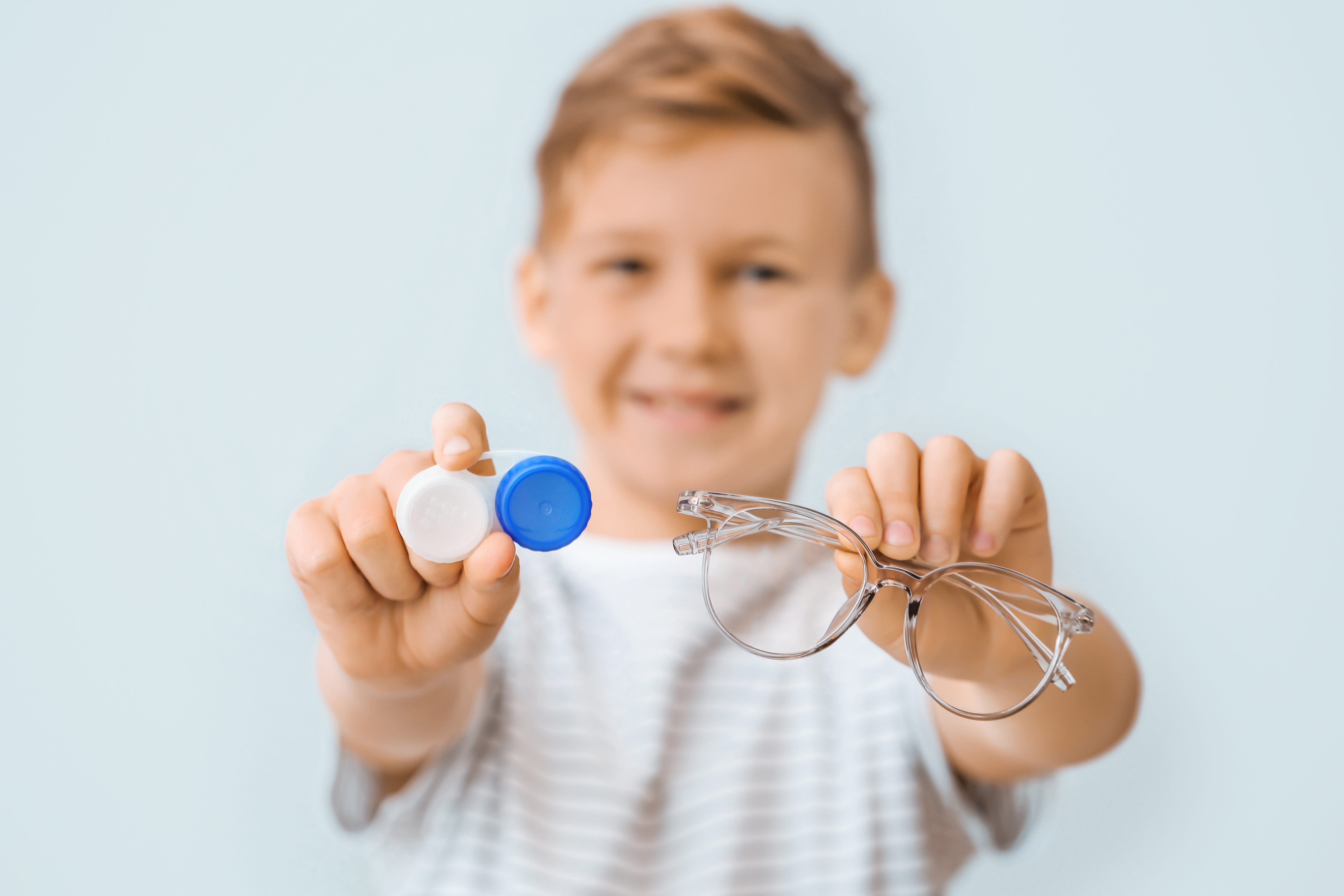
If your child’s glasses prescription seems to get stronger every year, simply updating their lenses may not address the bigger issue. Myopia, also called nearsightedness, often progresses as children grow. At Stirling Eyecare Center in Butler, we offer myopia management to help slow that progression and support your child’s long-term eye health.
What Is Myopia?
Myopia causes distant objects to appear blurry while close-up vision remains clearer. It typically develops when the eye grows too long, causing light to focus in front of the retina instead of directly on it.
Children may not always realize their distance vision is changing. Parents in Butler may notice signs such as squinting, sitting closer to the television, holding devices close to the face, or struggling to see the board at school.
Myopia can continue to worsen throughout childhood and adolescence. Higher levels of myopia are also associated with an increased risk of certain eye conditions later in life, which is why early detection and ongoing monitoring are important.
How Is Myopia Management Different From Regular Glasses?
Traditional glasses and contact lenses correct blurry vision, but standard prescriptions generally do not slow the underlying progression of myopia. Myopia management takes a more proactive approach.
The goal is to provide clear vision while also using treatment strategies designed to slow how quickly nearsightedness worsens. At our Butler eye care practice, we evaluate each child individually to determine which option may be most appropriate.
Myopia management may include:
• MiSight 1 day contact lenses - Daily disposable soft contact lenses specifically designed to correct vision while slowing myopia progression in eligible children.
• Low-dose atropine eye drops - Prescription drops used at bedtime that may help slow excessive eye growth associated with myopia.
• Soft multifocal contact lenses - Specialized contact lenses that can help provide clear vision while also supporting myopia-control goals.
The right treatment depends on your child’s age, prescription, eye health, lifestyle, and how quickly their myopia is progressing.
The Importance of Early Myopia Management
Myopia can begin at a young age, and children who develop it earlier may have more time for their prescription to increase. Starting myopia management when appropriate gives us an opportunity to address progression rather than repeatedly waiting for the next prescription change.
Regular pediatric eye exams also allow us to monitor your child’s vision closely. Even if your child has not complained about blurry vision, an eye exam can identify changes they may not recognize on their own.
Helping Your Child Maintain Healthy Vision Habits
Treatment is only part of protecting your child’s vision. We also encourage healthy visual habits, including taking regular breaks from prolonged screen and near work and spending more time outdoors. For families in Butler, combining healthy habits with regular eye exams and personalized myopia management can provide a more comprehensive approach to your child’s changing vision.
If your child’s prescription keeps getting stronger or you are concerned about nearsightedness, schedule an eye exam with Stirling Eyecare Center to learn more about myopia management. Contact our office in Butler, Pennsylvania, by calling (724) 285-2618 to book an appointment today.
Helpful Articles
article_category: products
article_category: psychiatry
article_category: faqs
article_category: cats
article_category: general
article_category: services
article_category: technology
article_category: dogs
article_category: restorative
article_category: vision therapy
article_category: contact lenses
article_category: health
article_category: conditions
article_category: eye surgery co-management
article_category: exotic
article_category: cosmetic
article_category: surgical procedures
article_category: aesthetics
article_category: preventative
article_category: ocular disease management
article_category: eyeglasses
article_category: eye health
article_category: large animal
[]
Flowbite is an open-source library of interactive components built on top of Tailwind CSS including buttons, dropdowns, modals, navbars, and more.
Check out this guide to learn how to get started and start developing websites even faster with components on top of Tailwind CSS.
All Eye Care Services
Find personalized eye care excellence with our comprehensive services. From eye exams to advanced diagnostics, trust us for all your vision needs.

Keep In Touch
For non-urgent questions or to learn more about our services, contact us today!
© 2026 Stirling Eyecare Center. All rights Reserved - Accessibility Statement - Privacy Policy - Sitemap
Managed and Designed by 